
Understanding Clearwater Beach Condo Amenities And Fees
June 18, 2026
June 18, 2026
If you are shopping for a condo on Clearwater Beach, the monthly fee can feel like the biggest mystery in the deal. One building may look similar to another, yet the dues can be hundreds or even thousands of dollars apart. The good news is that once you know what to look for, those numbers start to make a lot more sense. This guide will help you understand how Clearwater Beach condo amenities and fees work, what questions to ask, and what to review before you buy. Let’s dive in.
Condo fees on Clearwater Beach are not just a charge for using the pool or fitness room. In Florida, association budgets can include security, management, recreation facilities, utility services, building maintenance and repair, insurance, administration, salary expenses, and reserve funding.
That means your monthly dues often support both your day-to-day lifestyle and the long-term care of the building. A fee that seems high at first glance may include more services, more staffing, or stronger reserve funding than a lower-fee building.
Current Clearwater Beach-area listings show just how wide the range can be. In one sample, monthly HOA fees ranged from $386 at Dolphin Cove to $2,823 at a Sand Key beachfront penthouse, with other examples at $879 for Harbour Light Towers, $956 for Brightwater Point, and $1,097 for Ultimar.
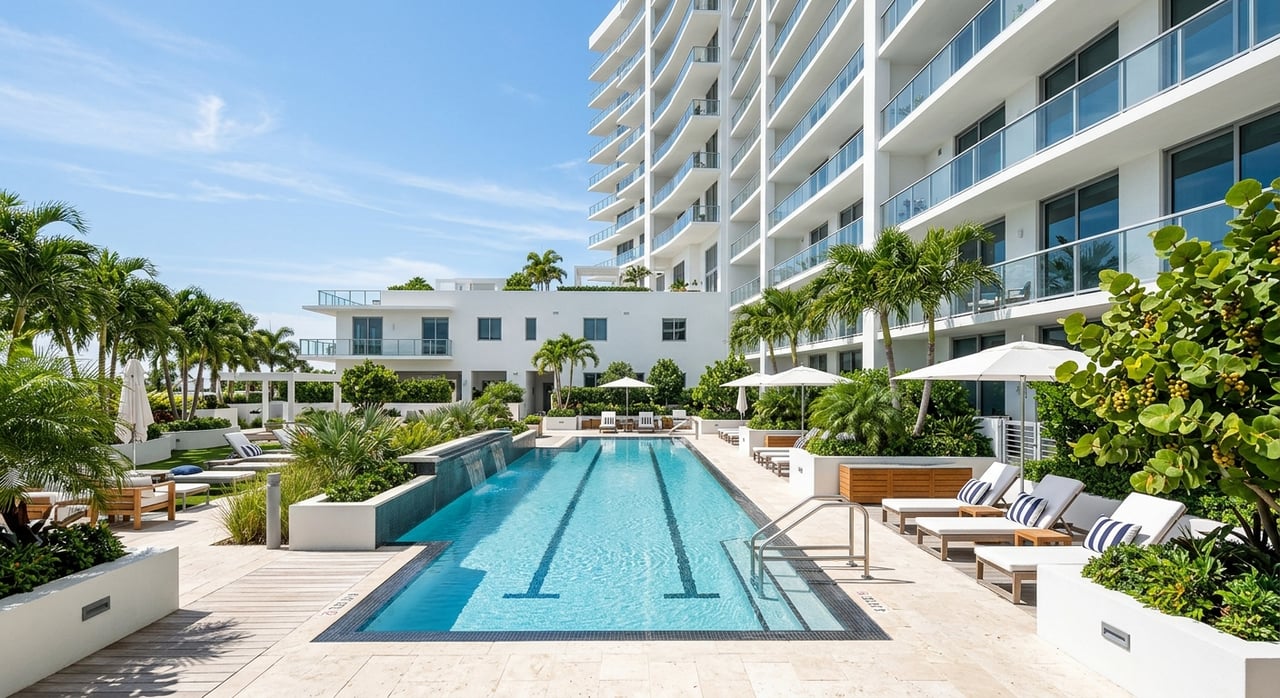
Many Clearwater Beach condos are designed around a resort-style living experience. Current listings commonly feature pools, spas, fitness centers, clubrooms, saunas, docks or boat slips, security or gated entry, elevators, and on-site management.
Some buildings also advertise direct beach access, heated waterfront pools, fishing docks, kayak or bicycle storage, billiard rooms, BBQ areas, tennis courts, basketball courts, and 24-hour guard service. The exact mix depends on the building, its size, and how it is operated.
That is why comparing condos by amenities alone can be misleading. Two waterfront buildings may both have a pool and beach access, but one may also include staffed security, more recreation spaces, marina-style features, or broader maintenance coverage.
In Clearwater Beach, buildings with larger amenity packages often have more shared infrastructure to maintain. If a community has guarded entry, multiple pools, docks, elevators, staffed common areas, or direct beach access, the association usually has more ongoing costs to budget for.
Those costs may include cleaning, repairs, utility services, payroll, insurance, vendor contracts, and long-term reserve planning. In many cases, a higher fee reflects a broader service bundle, not just access to more amenities.
Still, a lower fee does not automatically mean a better value. Some associations include fewer services in the dues, while others may keep fees lower because the building is smaller, staffing needs are lower, or reserve assumptions are different.
One of the most important parts of condo shopping is learning what is actually covered by the monthly fee. Florida law allows associations to budget for a wide range of operating and maintenance expenses, so the fee should be read as a bundle of services and obligations.
Current local listings show that some associations include items such as:
For example, one Clearwater Beach listing at 445 Hamden Drive states that the monthly fee includes flood insurance, internet, cable TV, water, sewer, trash, external pest control, and exterior and common-area maintenance. Another at 1270 Gulf Boulevard includes 24-hour guard service, insurance, maintenance of the structure and grounds, a manager, pool maintenance, sewer, trash, and water.
Even when condo fees cover a lot, they do not cover everything. Under Florida law, the association is generally responsible for maintaining the common elements, except where the declaration assigns certain limited common element responsibilities to the unit owner.
Insurance is where many buyers get surprised. The association’s master policy generally does not cover several unit-interior items within the unit boundaries, including floor, wall, and ceiling coverings, electrical fixtures, appliances, water heaters, built-in cabinets and countertops, and window treatments.
That is why many condo owners carry an HO-6 policy. According to the Florida Chief Financial Officer’s condominium insurance guide, an HO-6 policy generally covers your personal property, certain building items not insured by the association policy, and personal liability.
In simple terms, the condo fee and your personal insurance are two separate parts of your ownership cost. Looking at only one without the other can leave you with an incomplete budget.
Monthly dues are not only about today’s bills. They may also reflect how the association is planning for future repairs and replacement costs.
For budgets adopted on or after December 31, 2024, associations that are required to obtain a structural integrity reserve study generally cannot waive or underfund the required reserves for covered items. Florida law also allows reserve items to be funded through regular assessments, special assessments, lines of credit, or loans.
For you as a buyer, that means a monthly fee may be higher because the association is funding long-term building needs more fully. While that can affect affordability, it may also provide a clearer picture of how the building is preparing for major future costs.
A monthly fee is only part of the financial picture. You should also ask whether the building has had any recent special assessments and whether reserve funding matches current repair needs.
Florida also allows associations to assess owners for damage to commonly owned areas that is not covered by the association policy or when reserves are insufficient. The Florida CFO guide says HO-6 policies must include at least $2,000 of loss-assessment coverage, so it is smart to check whether that amount fits the building you are considering.
This is especially important in older or more amenity-heavy buildings, where repair costs can be significant. A low monthly fee may not feel like a bargain if it comes with surprise assessments later.
Before you buy a Clearwater Beach condo, take advantage of the records that Florida makes available. The DBPR says official condominium records can include the declaration, bylaws, rules, articles of incorporation, meeting minutes, current insurance policies, management agreements, contracts, accounting records, financial reports, structural integrity reserve studies, inspection reports, bids, ballots, rental records, and the buyer question-and-answer sheet.
These records must generally be made available within 10 working days of a proper written request. For many larger buildings, document access may become even easier, because effective January 1, 2026, condominium associations with 25 or more non-timeshare units must maintain a website or mobile application posting certain documents, including budgets, financial reports, rules, inspection reports, and the most recent structural integrity reserve study.
Even with that added convenience, it is still wise to ask for the full package directly. A careful review can tell you far more than a marketing sheet ever will.
When you compare Clearwater Beach condos, focus on the details behind the fee. A smart question now can save you from a costly surprise later.
Ask questions like these:
These questions matter in any condo purchase, but they are especially important on Clearwater Beach, where waterfront amenities and shared infrastructure can vary widely from one building to the next.
Florida’s current structural-safety rules are a major part of condo due diligence. Residential condominium buildings that are three habitable stories or higher must have a structural integrity reserve study completed at least every 10 years.
That study must address items such as the roof, structure, fire protection systems, plumbing, electrical systems, waterproofing and exterior painting, and windows and exterior doors. The DBPR also states that milestone inspections apply to residential condominium and cooperative buildings that are three or more habitable stories, generally when they reach 30 years of age, or 25 years in some local circumstances.
For buyers, these reports help show how the building is being maintained and whether future repair costs may affect fees or assessments. They should be part of your review, not an afterthought.
When you look at Clearwater Beach condo fees, the best comparison is not simply lowest versus highest. The real question is what you are getting, what you still need to insure or maintain yourself, and whether the association appears financially and operationally prepared.
A building with a higher monthly fee may include insurance, stronger reserves, more staffing, and more shared amenities. A building with a lower fee may still be a great fit, but only if you understand what is not included and what risks or future costs may sit outside that lower number.
The goal is clarity. Once you can read the fee as a full operating picture instead of a single line item, you will be in a much stronger position to choose the right condo for your budget and lifestyle.
If you want expert help comparing Clearwater Beach condos, reviewing amenity packages, and making sense of fees before you commit, Sheri Boesch offers the kind of organized, high-touch guidance that can make the process feel much more manageable.





Your next move deserves clarity and confidence. Connect with Team Opulence to buy, sell, or invest with guidance rooted in honesty, strategy, and results that truly align with you.